

Natalia Davies, 1928. SLSA: B 54538

Natalia Davies in her graduation gown, 1928. SLSA: B 54537

Photograph of Robert Menzies visiting Adelaide in October 1943. He is inspecting the Women’s Air Training Corps. The WATC was a voluntary auxiliary service which supported the RAAF. Nat is walking behind him to the right. SLSA: PRG 925/13/6
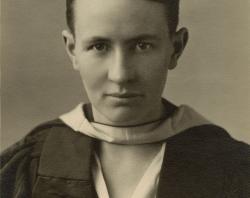
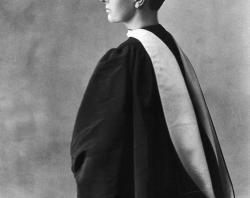
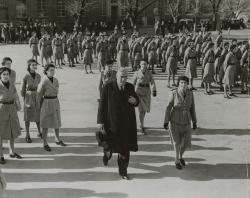
In the early 1930s Nat Davies realised that Hitler’s rise to power in Germany would end in a major war so, by early 1933, she had founded the Defence Society. The society began with 12 but had grown to 130 by the beginning of the War. As its president, Nat could obtain current information from the British Home Office, and she began to lecture on precautions in case of air-raid and poison-gas attacks.

Defence Society members practice shooting at Carrick Hill, c1940. SLSA: PRG 925/13/19

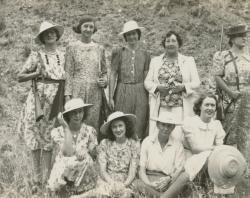
After shooting practice at Carrick Hill, c1940. Natalia Davies seated third left. Amylis Laffer standing centre. SLSA: PRG 925/13/26

Defence Society members practice shooting at Carrick Hill, c1940. SLSA: PRG 925/13/21

Defence Society members practice shooting at Carrick Hill, c1940. SLSA: PRG 925/13/22

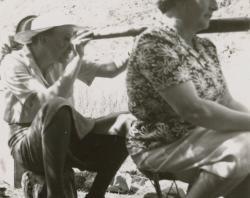
Natalia Davies using a telescope. SLSA: PRG 925/13/27
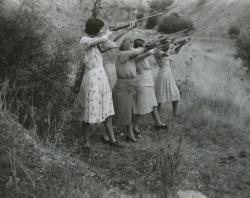
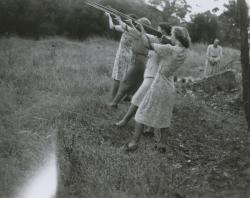
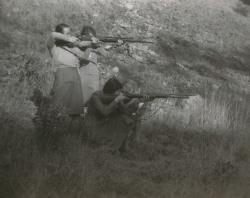
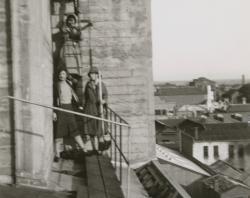
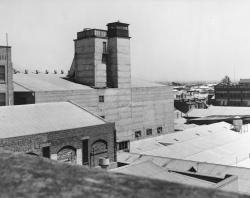
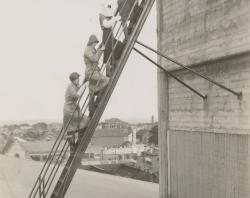
War was officially declared in 1939. By 1940 she was setting up and teaching evening classes in home front skills. These included first aid, home nursing, motor mechanics, basic electrical work and fire drills. The society's members were mostly women, and from all walks of life. The society charged a shilling an hour to teach rifle skills. Hundreds learned how to shoot and maintain a rifle. Once Japan joined the war in 1942, the Defence Society added classes in pistol shooting, map-reading and unarmed defence. Each night members of the group climbed ladders to their roof-watching post in the city.

Climbing up the roof of the Duncan building for roof watching. SLSA: PRG 925/13/30

Photograph of the roof of Duncan Building, Franklin Street, Adelaide. It was used as for spotting air raids during the Second World War. SLSA: PRG 925/13/15

Women climbing the steel ladder from the rear of the watching post. SLSA: PRG 925/13/32
In Adelaide, Nat Davies was the only female civil-defence area officer. She advised the Education Department, designed camouflage designs so well that two high-ranking military personnel with binoculars, could not distinguish wearers from the landscape. Hessian sniper suits were produced by society members at Keswick Barracks. Ms Davies had been appointed deputy-commandant of South Australia’s Women's Air Training Corps and in 1941 joined the Women's War Service Council. She was regarded as an inspiring leader.

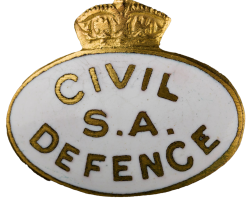
Civil Defence South Australia badge owned by Natalia Davies. SLSA: PRG 925/14/1

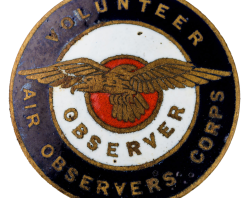
Volunteer Air Observers Corps badge owned by Natalia Davies. SLSA: PRG 925/14/2

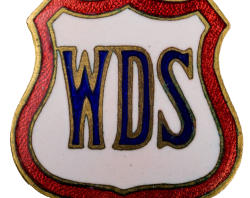
Women's Defence Service badge owned by Natalia Davies. SLSA: PRG 925/14/3

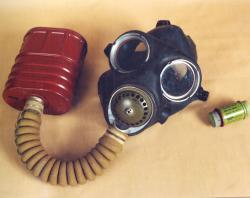
Photograph of gas mask owned by Natalia Davies. Civil defence realia. SLSA: PRG 925/17/10

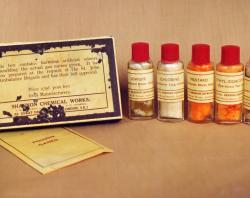
Photograph of a Shannon Chemical Works, London box which 'contains harmless artificial odours resembling the actual gas names given' along with five glass bottles titled Lewisite, Chlorine, Mustard, Ethyl Idoacetate and Phosgene containing stained cotton wool, and a leaflet titled 'Poison Gases'. Civil defence realia. SLSA: PRG 925/17/5

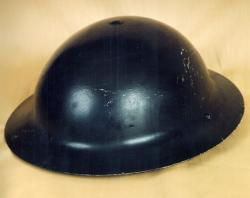
Tin helmet used by Natalia Davies. Civil defence realia. SLSA: PRG 925/17/6
Post-war, Nat Davies wrote historical programs for the Australian Broadcasting Commission’s education department. In 1947 she became an Australian national radio quiz champion. During the War Nat’s full-time voluntary staff officer, Amylis Laffer, had become her close friend. She and Ms Laffer each had rooms at the Willard Guest House, in Wakefield Street, Adelaide. This is where Nat Davies died on 29 April 1951, of septicemia. Miss Laffer later endowed the Natalia Davies prize for first-year history, at the University of Adelaide.