
Imagining history: Thelma Afford - a woman for all seasons
Shining a light on one of South Australia’s most talented costume designers

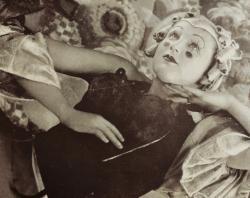
A reclining Thelma Thomas in her modernist version of the Columbine character in Nikolai Evreinov's play, A Merry Death, produced by Ab-Intra Studio. Source: South Australian Homes and Gardens, 1 March 1934.

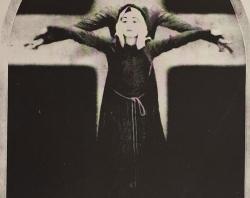
Robert Helpman and Thelma Thomas in 1932 Ab-Intra production of The Stained Glass Window: Source: Thelma Afford collection

Thelma Afford working on costume designs for Sydney Sesquicentenary, 'March to Nationhood', 1938. SLNSW: Call no. PX*D 330/f.229

A leap from art to the theatre
In the early 1930s, Adelaide was home to nearly twenty small independent theatres, many of them thriving despite the Great Depression. Thelma became involved with the WEA little Theatre and the avant-garde Ab-Intra Studio Theatre, designing and acting between 1932 and 1935. Productions in which she appeared included Woman Song, The Robe of Yama, The Stained-Glass Window, The Aspen Tree and the company’s 1935 farewell performance, Archway Motif.
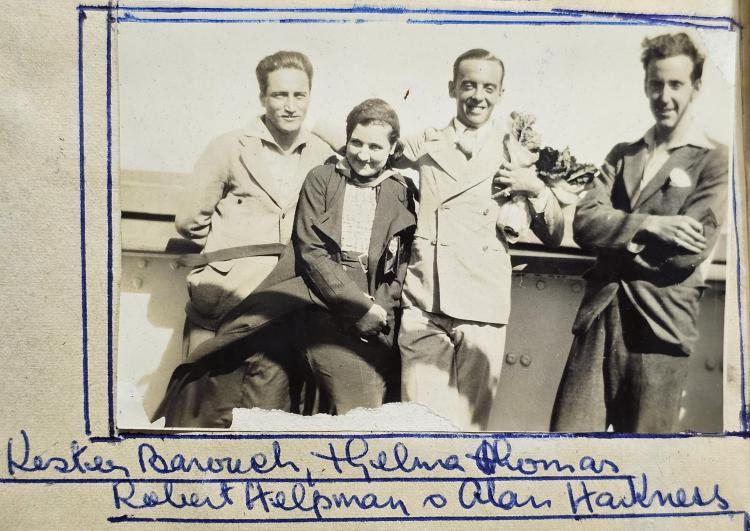
Thelma was part of a circle of influential SA modernists and modernisers. Her associates included radio broadcaster, kindergarten teacher and Dalcroze Eurythmics pioneer Heather Gell, and Brenda Kekwick who was an actor, singer, storyteller and founder of Junior Theatre and Children's Hour storyteller in the Children's Library. As an actor, dancer and designer, the talented Miss Thomas worked closely with Ab-Intra’s founders Kester Baruch (later Berwick) and Alan Harkness, and a young actor named Robert Helpman (he later added the second 'n' to his name – Robert Helpmann). The young creative soon found herself at the heart of Adelaide’s modernist theatre scene.
A move to Melbourne
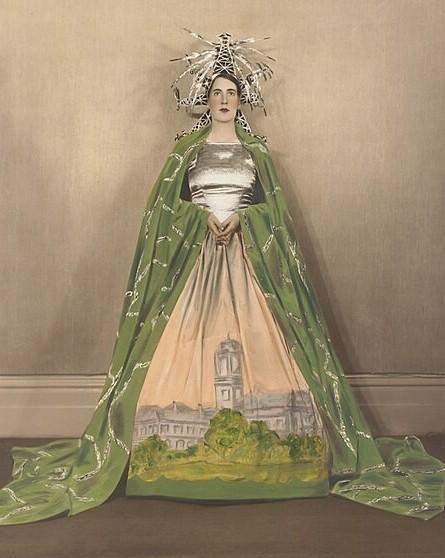
In 1934, Thelma took leave from the SA Education Department and moved to Melbourne to study at George Bell’s modernist art school and work under costume designer Pierre Fornari. After designing costumes for the play Nebuchadnezzar, she was commissioned to create ten costumes for the Melbourne Centenary Pageant in October 1934. The Melbourne Argus praised the event and described her design for the state of Victoria costume as ‘almost breath-taking in its beauty.’ This costume is in the collection of the State Library of Victoria.
A successful return - 1936 Centennial Pageant
Returning to South Australia in 1935, Thelma was appointed costume designer for the state’s spectacular 1936 Centennial Pageant. Her costumes were designed for re-use across several of the four major occasions she dressed throughout the year.
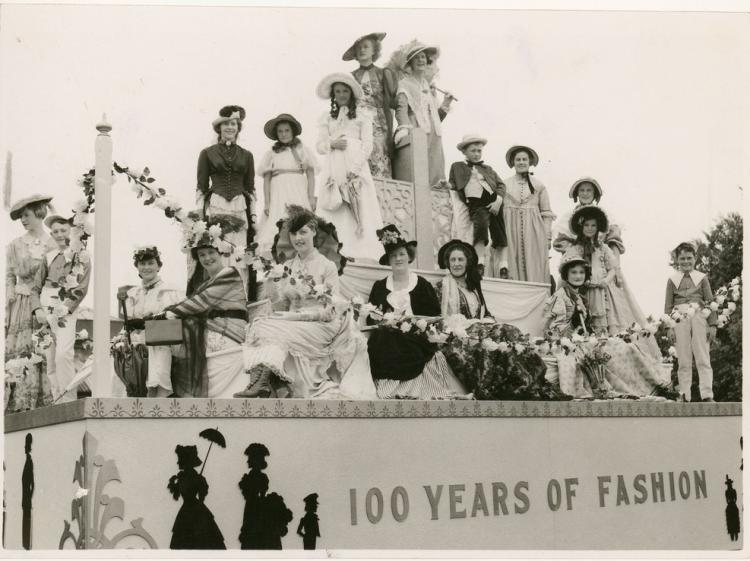
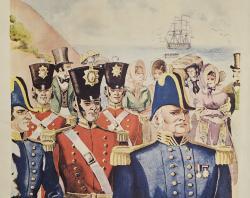
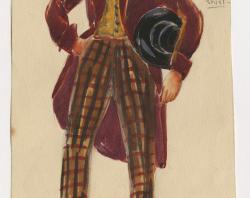
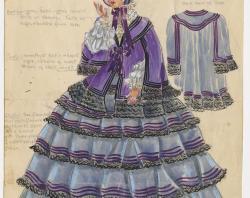
The Proclamation re-enactment at Glenelg and Colonel Light the Founder required historically accurate19th century costumes. The Pageant of Progress and Heritage combined period dress, interpretive and symbolic creations. Heritage at the Tivoli, designed in close collaboration with choreographer Heather Gell and writer Elinor Walker, was such a hit that repeat performances were staged. Her work blended meticulous historical research with creative flair, balancing authenticity and dramatic impact, which was a hallmark of her style.

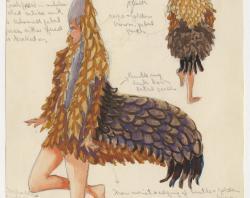
Costume design for emu. SLSA PRG 689/1/59

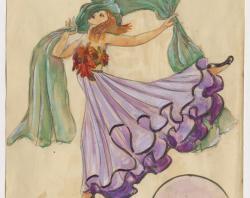
Wine costume for Heritage ballet. SLSA: PRG 689/1/30

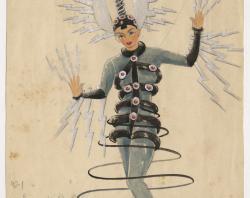
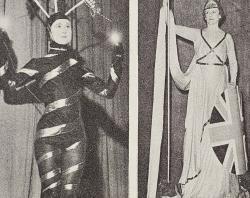
Design for Electricity costume, Pageant of Progress. SLSA: PRG 689/1/66

Morse Code costume worn in Heritage. View the design SLSA: PRG 689/1/34

The News and the Mail: Pictorial Centenary Souvenir: special number of the News and the Mail, 8 Feb 1937

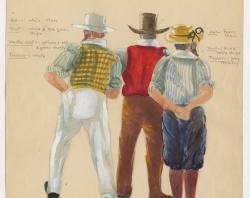
Design for settlers. SLSA: PRG 689 /1/74

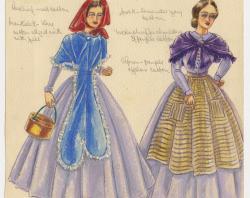
Design for two females in crowd at Glenelg Proclamation event. SLSA: PRG 689/1/69

Design for gentleman in Heritage pageant. SLSA: PRG689/1/20

Elaborate costume design for Mrs Hindmarsh, wife of Governor Hindmarsh. SLSA: PRG 689/1/9
Meeting Max Afford
Her growing reputation led to her involvement in the massive 1938 Sydney sesquicentenary for which she produced hundreds of designs. She resigned from teaching and travelled to Sydney in 1937. On the train, she ran into playwright Max Afford, a colleague from Adelaide. They married in April 1938, remaining in Sydney as Max became a sought-after stage and radio playwright, and later a screenwriter and crime novelist.
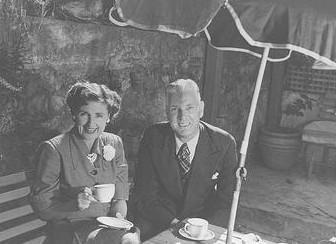
The couple worked closely together. Her designs accompanied most of his plays, especially at the Minerva Theatre where Thelma was resident designer from 1940 until 1950. In 1954 Max died of cancer. He was only 48. Thelma was devastated but soon returned to work.
A national reputation
Thelma Afford's designs were seen across Australia, including Melbourne’s Tivoli, Sydney’s Independent Theatre, and WA’s Garrick Theatre, among others. She moved into cinema, designing for Cinesound Productions and filmmakers. Charles and Elsa Chauvel. When television arrived in Australia, she created the period costumes for the ABC’s first televised live drama in 1957, The Twelve-Pound Look by JM Barrie. Her dedication to accuracy and choice of fabrics made her one of Australia's leading historic costumiers.
A return to teaching
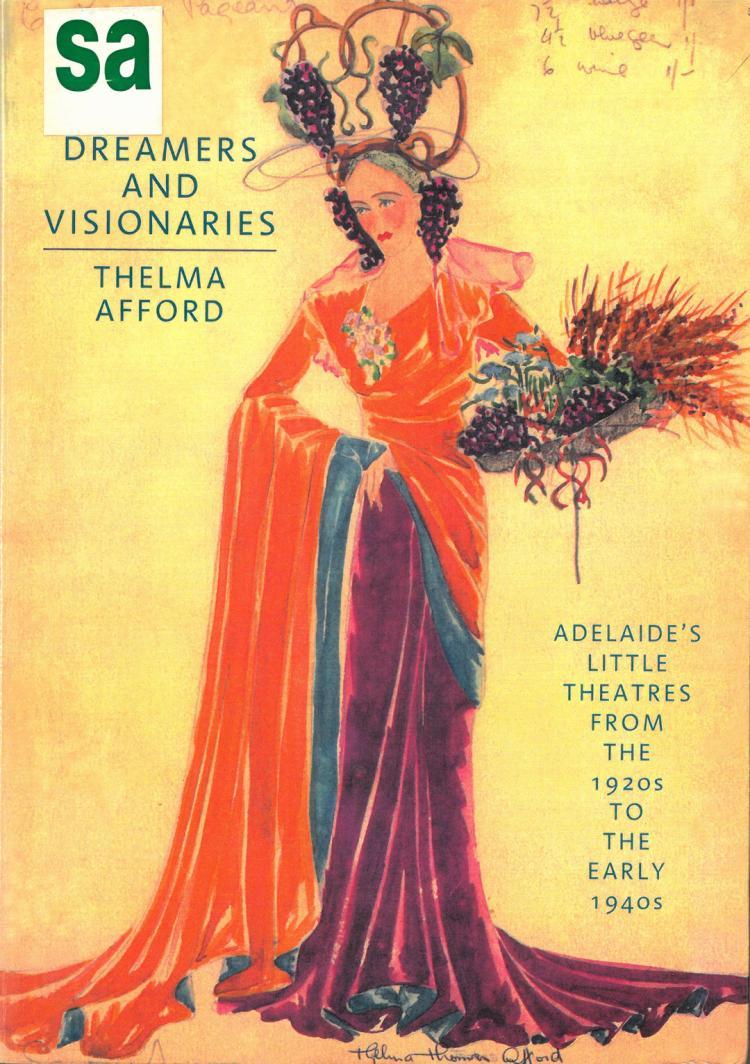
In the early 1960s, Thelma returned to teaching as senior art mistress at a private girls’ school in Sydney, a role she held until her retirement in 1978. Alongside teaching, she remained active as a journalist and author, writing on fashion and design. She later received a grant to research Adelaide’s early twentieth century theatres. The result was Dreamers and Visionaries: Adelaide's little theatres from the 1920s to the early 1940s. It highlights the influence of small pioneering theatre groups on ‘the city of culture’ (as Adelaide was known) and the subsequent origins of the Adelaide Festival of Arts.
Her legacy lives on
Thelma Afford passed away in 1996, leaving a remarkable legacy. Under the terms of her will, the biennial Thelma Afford Award for Costume Design in Stage and Screen and the Max Afford Playwrights' Award were established.
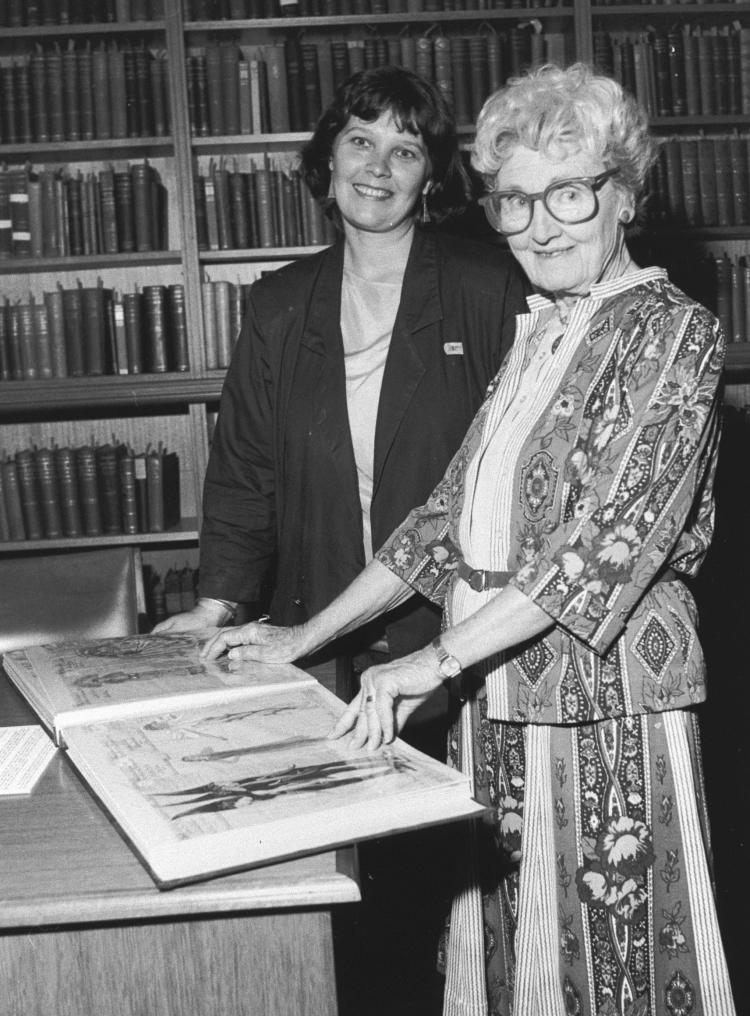
In 1986, she donated 80 of her 1936 costume designs to the State Library of South Australia, which you can view here on the Digital Collections website. The Library also holds her personal records, scrapbooks and correspondence. Additional designs, images, and archival materials are held by the State Library of Victoria, the State Library of NSW, the National Film and Sound Archive, and the Fryer Library in Queensland.
Thelma Afford’s creative vision, versatility, and dedication to both art and theatre continue to inspire designers, actors, and teachers across Australia, proving that her influence shines long after the final curtain call.
More to explore
Dreamers and Visionaries : Adelaide's Little Theatres from the 1920s to the Early 1940s by Thelma Afford
Australasian Drama Studies, Ab-Intra Studio Theatre in Adelaide 1931-1935. No 12/13 (1988) pp 167-180, by Thelma Afford
Thelma Afford catalogue record. SLSA: PRG 689
Costume Designs for 1936 Centenary events
Wheat costume. SLSA: D 7830(Misc)
The News and the Mail: Pictorial Centenary Souvenir: special number of the News and the Mail, Feb 8, 1937
Thelma May Afford (1907–1996) by Michelle Arrow (Australian Dictionary of Biography)
Malcolm (Max) Afford (1906–1954) by Michael J. Tolley (Australian Dictionary of Biography)
Dreamer and Visionary: discovering costume designer Thelma Thomas Afford, La Trobe Journal by Annette Soumilas
Description of Max and Thelma Afford Papers, Fryer Library Manuscripts, University of Queensland