
From archives to adventure: Walter Marsh and Australia’s greatest museum heist
When Walter Marsh, author and award-winning journalist, first heard about the daring 1940’s theft of thousands of butterflies from some of Australia’s most prestigious museums, he immediately knew it was a story that needed to be told.
The Butterfly Thief: adventure, empire, and Australia’s greatest museum heist, Walter’s latest book, explores the intriguing story of Colin Wyatt, a British man of many guises, from ski champion and mountaineer to wartime camouflage expert, artist, butterfly collector and then thief!
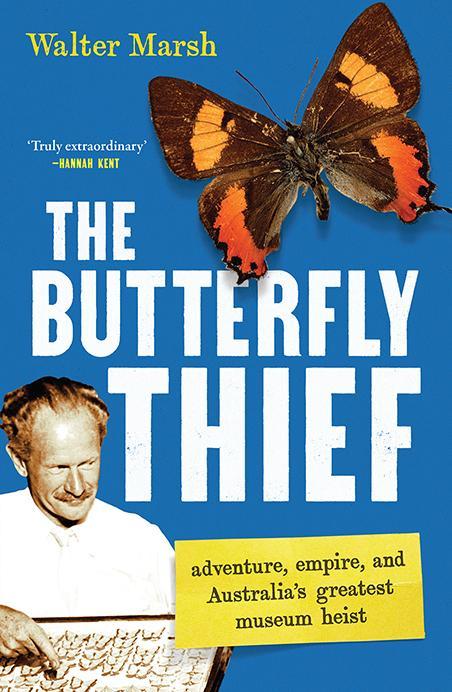
The story begins in 1947, when museums in Sydney, Melbourne and Adelaide noticed thousands of butterflies missing from their collections. An investigation led all the way back to England, where New Scotland Yard found them in Wyatt’s possession. Despite a partial confession, the case still carries plenty of mystery decades later. Did Wyatt really allow himself to be locked into the South Australian Museum after closing time, before breaking out after making his selections? And why were Australia’s museums so welcoming to this gentleman thief? In telling this story, Walter delves into the fine line between collector and thief, and the legacies of dispossession and repatriation that many museums face today.
Winner of the 2024 SA Literary Mid-Career Fellowship, Walter shares that,
“Libraries and archives – particularly the State Library collections – have always been central to my writing, so receiving the fellowship meant a lot.”
The fellowship gave Walter the time and resources to dive into researching this story. The SA Literary Fellowships are a partnership between the State Library of South Australia and Writers SA and support emerging, established, and First Nations writers.
In piecing the story together, Walter drew on unpublished case files, dossiers and private archives. In particular, he used resources from the State Library collections, including rare and long out of print books by Gustavus Athol Waterhouse and George Lyell – two famous collectors whose butterflies were among those stolen. The library also holds a memoir by John Evans, an English scientist and later an Australian Museum director who in 1947 became the man-on-the-ground for the English part of the case. Using the State Library collection, from facsimiles of Joseph Banks’ Endeavour journals to books about 1920s seances, Walter filled in the many gaps in the story.
When asked what impact his book would have on readers, Walter says
“Museum collections are often largely unseen and at times opaque to the general public. I hope this story draws people in to understand their scientific and cultural value, but also the cost and toll that went into creating these legacies. And, if museums are a representation of our broader history, it prompts readers to consider the complexities of the world we live in, and the histories all of us inherit.”

Walter’s books are driven by historical narratives but also reveal something about the present moment. He shares that he tries to write in a kind of novelistic, narrative non-fiction medium that is heavily indebted to a lot of New Yorker-adjacent writers. His latest book drew influence from The Library Book by Susan Orlean, The Silent Woman by Janet Malcolm, and more recently The Premonitions Bureau by Sam Knight and A Thread of Violence by Mark O’Connell.
Walter's Writing Process
A typical writing routine for Walter is to start with a solid foundation of research material, then each day he fleshes out the outlines of each chapter, arranges all the pieces of information he has gathered and then weaves it all together. Walter would visit the State Library regularly or use Trove to check small details or fill a gap in his knowledge.
For Walter, the favourite parts about being a writer are,
“The little thrills of discovery in an archive, a new connection made, or the satisfaction of wrestling a difficult chapter into shape. There’s also something the author George Saunders writes about, how writing a book is a cumulative act of revisions and incremental improvement that allows you to tap into a bolder, cleverer, clearer version of yourself than you are in any given moment.”
And what advice does Walter have for aspiring authors working on their first book? Walter shares,
“These days a reader’s attention is a gift and a scarce commodity; you can’t take it for granted, and if you want to bring them along on a journey do your best to make sure it all pays off. Also, there’s no harm in taking a moment to read your work aloud and ask: does this sentence actually make sense?”
Having released his first book, Young Rupert: the making of the Murdoch empire, in 2023, Walter is taking some time to consider his next project. For now, Walter will be keeping busy at upcoming writers’ festivals in the new year, including Adelaide Writers’ Week in March 2025.
Buy the Book
The Butterfly Thief: adventure, empire, and Australia’s greatest museum heist can be purchased from Scribe and bookstores.
Header image: Colin Wyatt as a desk-bound public servant, October 1946. Photo Alec Iverson. Courtesy State Library of New South Wales and ACP Magazines Ltd.
Written by Tracey Parnis, Marketing and Communications Coordinator with Walter Marsh. Special thanks to Walter Marsh for taking the time to answer questions for this article.