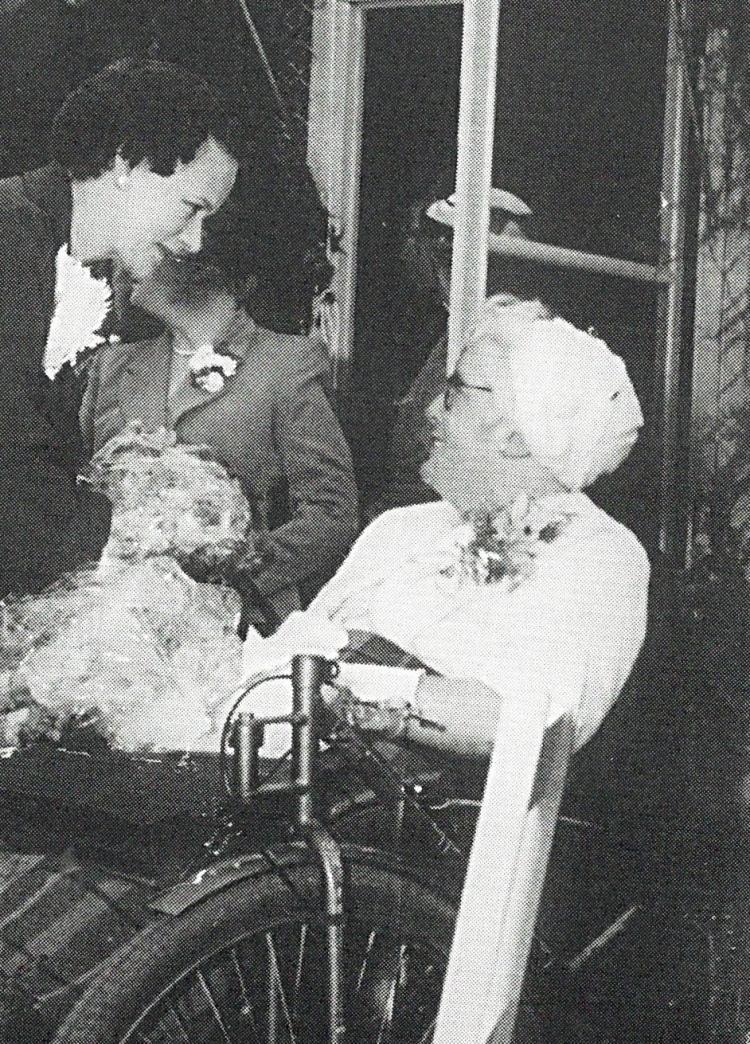
Doris Taylor - The woman who changed South Australia, one meal at a time
Doris Taylor was born in 1901 to a working-class family in Norwood. At eleven, after two childhood falls, she became severely disabled and spent the next five years in and out of hospital. Her spinal injuries left her with partial mobility in her arms and hands but no movement below her shoulders, thus needing help with almost all daily tasks that most people take for granted.
Despite this, she and her family vehemently rejected suggestions that she should move to the Home for Incurables (later renamed the Julia Farr Centre). Instead, she remained at home with her parents and siblings.
Doris was confined to a wheelchair for the rest of her life.
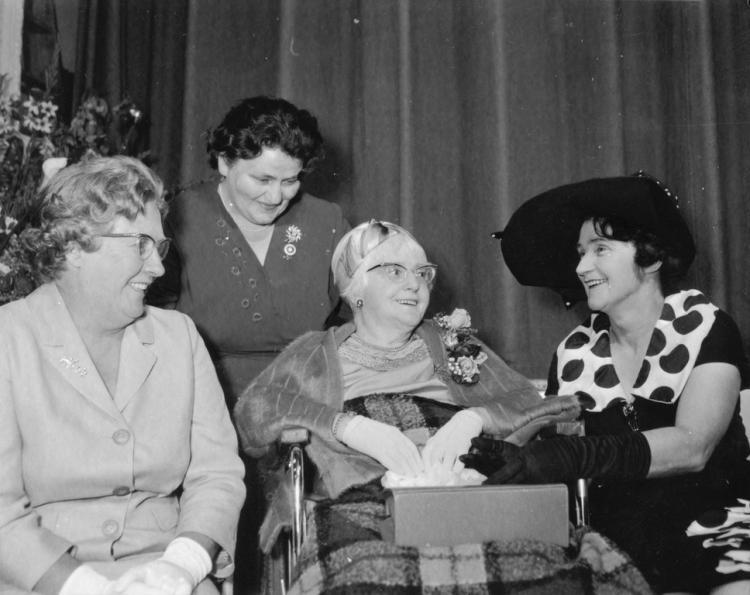
Even after years of operations and medical treatment she could move only her head, shoulders, arms and hands. Later in life her hands became less viable as arthritis affected her fingers, leaving only her thumbs of any use.
Former South Australian Premier Don Dunstan captured her remarkable spirit best in his memoir Felicia:
‘She could move nothing else – except other people off their behinds. For she was an extraordinary dynamo.’
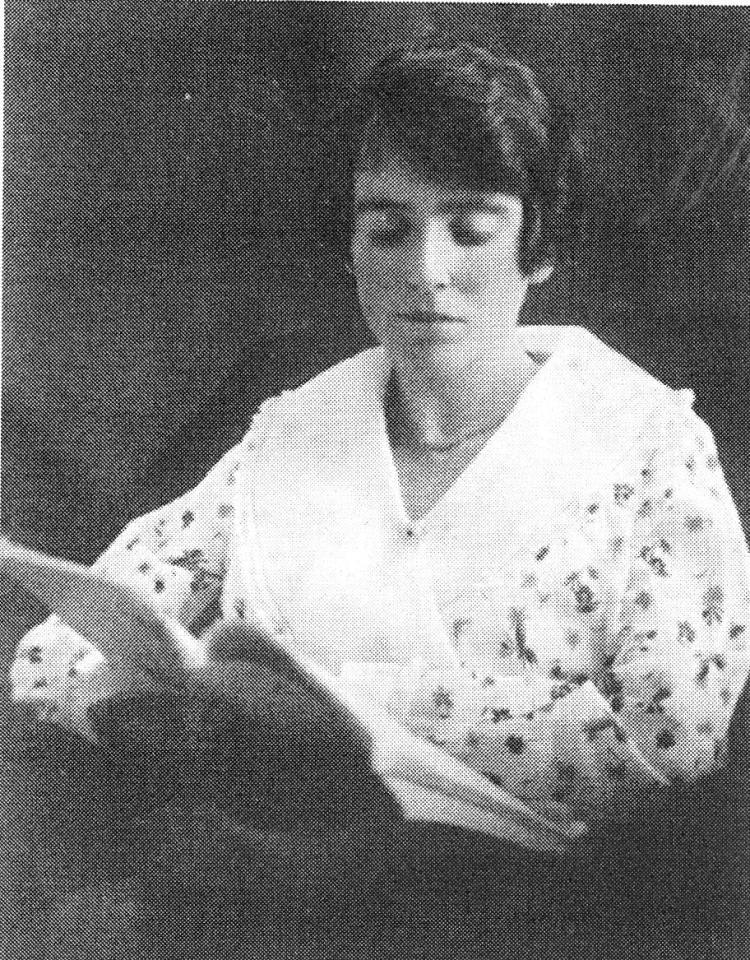
Despite her disability, Doris was determined to make a difference to her community and society at large and became one of South Australia's most influential women. She read widely in literature and the arts, philosophy, and politics. What she lacked in mobility, she made up for with intelligence and ingenuity. During World War Two she underwent an operation meant to help her to walk again. It failed but did give her back some upper dexterity. This meant that she could finally feed herself without aid. Doris then learnt to type using one finger and devised a way to use the telephone. She also taught herself to embroider and to apply her own lipstick.
Most of all, she learnt never to take 'No' for an answer!
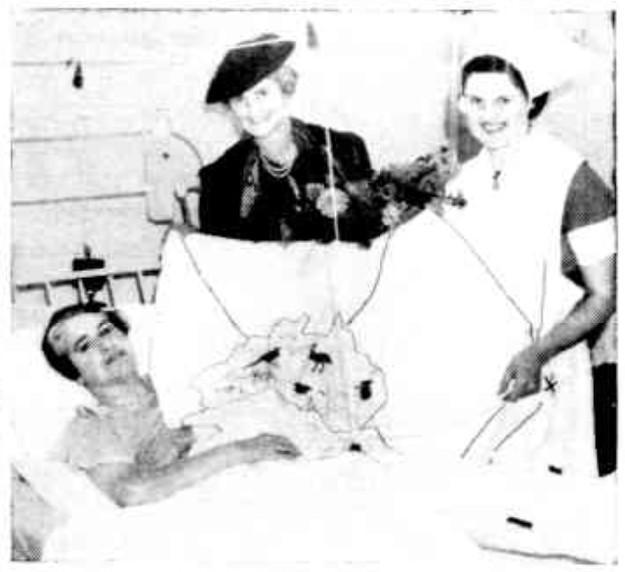
An extraordinary dynamo
During the 1930s Depression, Doris Taylor became fundraiser and secretary for her local kindergarten mothers' club, joined the Australian Labor Party and became secretary of the West Norwood sub-branch. In the early 1950s she persuaded a reluctant young lawyer to enter politics. His name was Donald Dunstan. Doris managed his election campaign for the House of Assembly seat of Norwood in 1952 and he won.
Dunstan never forgot her influence:
‘Doris Taylor is one of the great unsung heroines of Australia, and I can never record sufficiently the gratitude I owe her, as do thousands of others.’
Around this time Miss Taylor also became honorary public relations officer for the SA branch of the Australian Pensioners' League. All around her she saw a desperate need for help with services for the aged, the poor, and those living with disability and came to believe that political action through legislation was the solution. It wasn't that she trusted politicians to always do the right thing. It seemed more that she trusted people to persuade politicians to do the right thing by those who had elected them.
Doris was both perceptive and persuasive. And she was no pushover!
She was a passionate campaigner for changes to social services, especially for the aged. Horrified that some pensioners had been placed in Parkside Mental Hospital, not due to mental illness but for lack of anywhere else to go, Doris increased her efforts for improved social welfare and came up with an idea that could help keep older and infirm South Australians living in their own homes for longer.
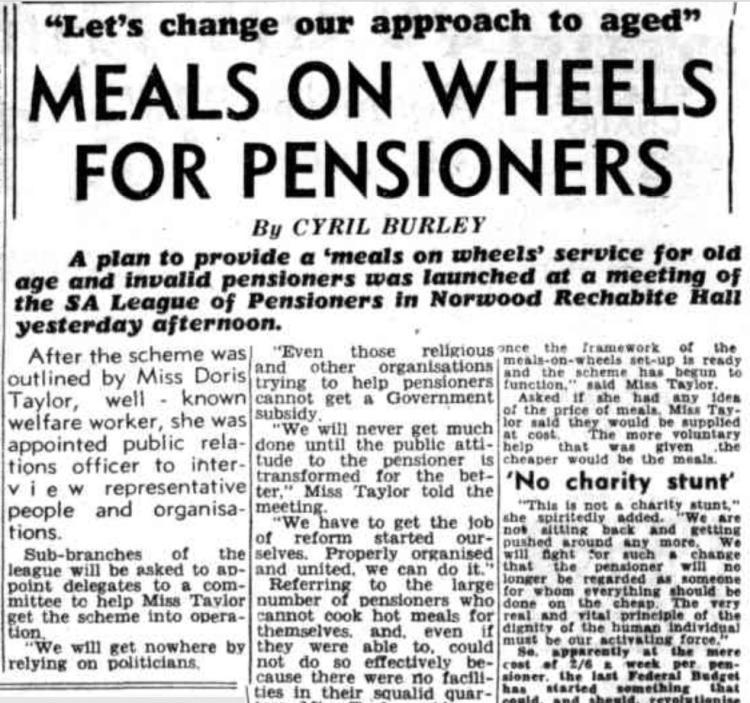
A meeting of the Australian Pensioners League was called for 6 October 1953 in the Rechabite Hall at Norwood. It was an unseasonably rainy day but 96 aged and invalid pensioners turned up to discuss Doris's proposal. In a mid-1963 article in the Combined Pensioners Association news bulletin she recalled:
‘They declared that, given the opportunity, they would rather stay in their homes and have a three-course hot meal brought to them at midday five days a week than go to institutions...’
The meeting raised just five pounds to get the idea started. (That’s around $181 in today’s currency.)
A proposal was then put to a larger meeting in December which was attended by fifteen South Australian welfare organisations. The formal resolution they passed called for
‘…immediate establishment of a Meals on Wheels organisation’
Their first kitchen opened in a donated Nissan Hut at Port Adelaide on 9 August 1954.
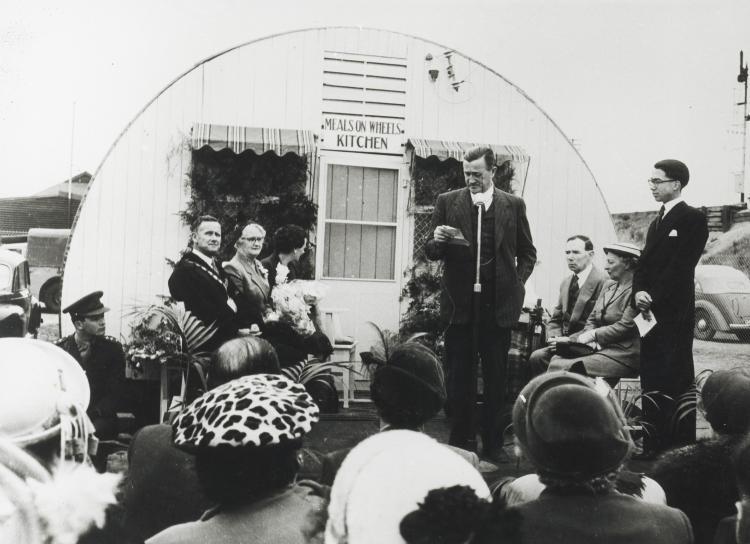
Well aware that pensioners did not want a handout but a fair deal, Meals on Wheels was never designed to be a completely free service. Its model relied primarily on volunteers to prepare, cook and deliver meals. On its first day, eleven volunteers provided meals to eight local residents.
A great idea becomes a grand vision
Other kitchens soon opened at Norwood, Hindmarsh and Woodville, and the idea continued to expand into regional areas and other states. The South Australian model was also adopted overseas.
Doris was often invited to address regional and interstate audiences as the SA Meals on Wheels model was taken up beyond Adelaide. In 1959 she received an MBE for her commitment to the welfare of disadvantaged South Australians. Doris made her way around using a powered wheelchair which she operated with her shoulders. It had no canopy but that did not stop this indefatigable woman from going out in all weathers. For long distance trips the chair was loaded into a taxi truck.
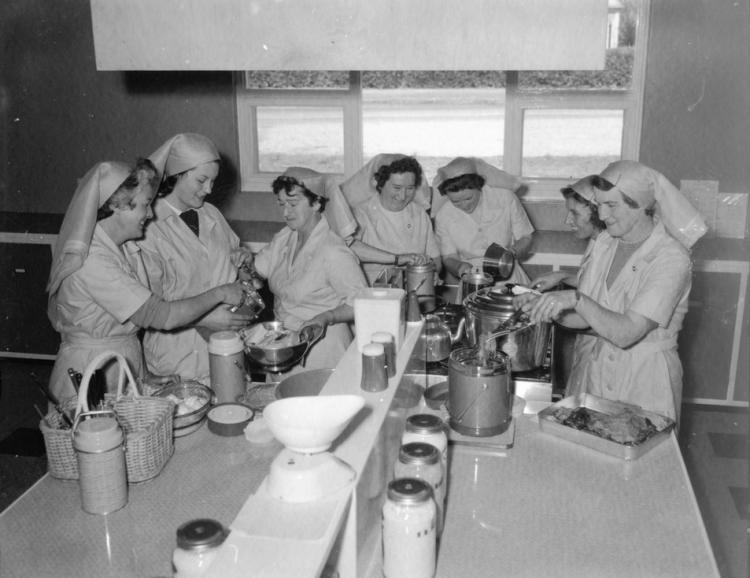
Over fifteen years of leadership she spoke to hundreds of meetings, gave numerous interviews, spoke regularly on radio and travelled thousands of miles to enlist volunteers and support. Doris did most of her work in an honorary capacity, living on her disability pension until 1958 when she became the first full-time executive of Meals on Wheels. She remained its driving force until her death.
Meals on wheels today
Meals on Wheels flourished, and continues to be a vital community resource, not just as a food provider, but because its volunteers provide a friendly face and deeply needed human connection with its users. Since the Port Adelaide branch opened its doors in August 1954, more than 80 branches have been created across SA by thousands of dedicated volunteers. who now provide 1.2 million meals a year. How many meals is that since those first eight back in August 1954? According to the Meals on Wheels SA website the number is now close to 60 million.
A remarkable legacy
Miss Taylor's intelligence, determination, and vision went far beyond the confines of her wheelchair. She was a force to be reckoned with, and a force for good.
Doris Taylor died on 23 May 1968, but her legacy continues to nourish South Australians every single day. The day after her death, The News called for the creation of a memorial or plaque bearing her name and an inscription. Today, those words remain as fitting as ever.
‘In memory of Doris Taylor, MBE, who gave all she had and received nothing in return, except the thanks of thousands.’