
Plotting the Oceans: Stories of powerful maps and their makers
Presented by Royal Geographical Society of South Australia
- Date
- Thursday 16 July
- Time
- 5.30 to 7pm
- Location
- Hetzel Lecture Theatre, Institute Building (Ground floor)
- Cost
- $10.00 per person
Bookings required
- About the presenter
Associate Professor Sarah Hamylton, coastal geographer
- Questions?
- For any questions regarding the event, please reach out to the RGSSA:
- Phone: 0874246311
- Email: admin@rgssa.org.au
- State Library Supports
-
Description
Step into the world of exploration, science, and discovery as Professor Hamylton brings to life the remarkable stories behind some of history’s most influential maps and map makers.
Maps are powerful. They carry messages via their carefully crafted designs, and work to shape society’s understanding of, and relationship with, the natural world.
Charles Darwin mapped the world’s coral reefs to support a theory about how they formed at a time when they represented a mortal danger to seafarers. In doing so, he developed ways of reasoning with maps that shaped his eventual theory of evolution.
Drawing on her own global adventures as a mapmaker, Professor Hamylton will uncover what lies behind – and beyond – the maps that shape how we see our world in a fun, engaging and thought-provoking tour of geographical story-telling and insights.
Cost: RGSSA Members $5, non-members $10
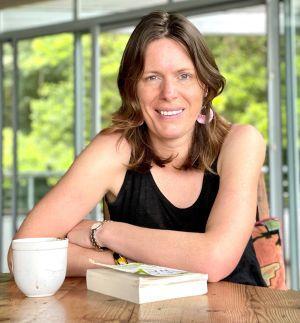
Sarah Hamylton is internationally recognised as a leading coastal geographer with over twenty years of experience mapping, monitoring and modelling a range of marine and coastal environments.
As an Associate Professor at the University of Wollongong, Sarah is Director of the Spatial Analysis Laboratory. She co-leads a coastal research group of more than 30 students & staff who collect and analyse data from drones and satellites to understand contemporary coastal management challenges.
Sarah has written over 130 scientific publications and worked in Fiji, Australia, the Red Sea, The Seychelles, Indonesia, the Philippines, Malaysia and Belize. Her maps have helped establish marine protected areas and been used in the European Court of Human Rights and her models of how climate change impacts coral reefs have informed national coastal management policies
FAQs
-
How do I get to the State Library by public transport?
-
The 'State Library, Art Gallery, Museum' tram-stop is just outside the State Library. There are bus stops close by, near the War Memorial on North Terrace. The closest train station is the Adelaide city station on North Terrace.
You can plan your journey via Adelaide Metro.
-
Is there car parking near the State Library?
-
The nearest car park is Wilson's Adelaide Central car park, 225 North Terrace, next to David Jones.
There is paid (metered) street parking along Kintore Ave and Victoria Drive.
-
Where is the wheelchair and stroller access?
-
Access to the Spence Wing first floor and the Mortlock Chamber is via the lift in the glass foyer entrance of the library.
Access to the Institute Building is via the external ramp on the Kintore Ave entrance or via the internal ramp between the Institute Building and the Spence Wing (opposite the Treasures Wall).
There is on-street disabled parking available on the nearby roads. View more information and maps of Adelaide City Council's Disability parking for permit holders.
-
How do I check if the Mortlock Chamber is open when I plan to visit?
-
The Mortlock Chamber may close for private events, check our opening hours for any closure times.
When it is open you can visit the Mortlock Chamber on the ground floor to look at the exhibition bays. The upper levels of the Mortlock Wing include study areas.
-
Is there a cafe at the State Library?
-
Yes, the State Library Cafe is open Monday to Friday from 8am to 4pm and Saturdays from 12 to 4pm.
Find out more about the cafe and resident organisations at the State Library.