
Flagstaff at the Port
Researching the Panorama of Port Adelaide
People who work in libraries are rarely able to resist a good research mystery, and when Frank G. Hankey’s 1855 panorama of Port Adelaide arrived at the State Library, our researchers wasted no time diving in.
Hankey was an artist, a fraudster, and clearly a man who left behind more questions than answers. As we began investigating the panorama and the ships captured within it, each discovery opened the door to another puzzle.
What we’ve uncovered so far has intrigued us, baffled us, and sparked even more curiosity. So, we thought we’d share a few of our tales of discovering with you.
The panorama flagstaff
This particular story focuses on the flagstaff that Hankey drew at the top of Commercial Road, roughly where the Port Adelaide lighthouse is now.
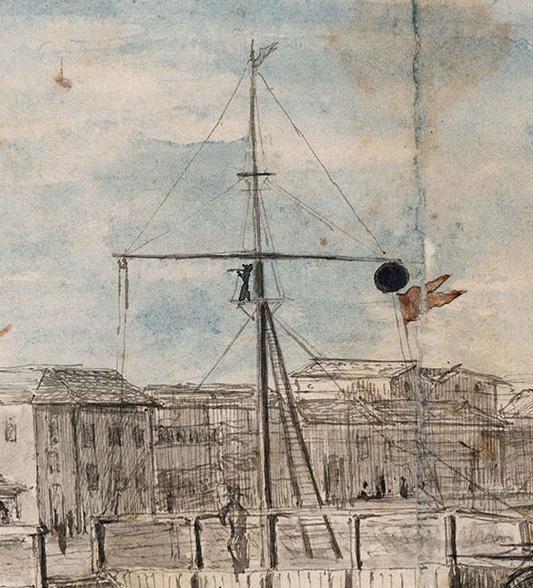
You can just make out a small figure with a telescope here. This flagstaff was part of a signalling system in use at the time, where flag codes were used to communicate shipping movements with a corresponding flagstaff that was in the city, on the corner of West Terrace and Franklin Street.
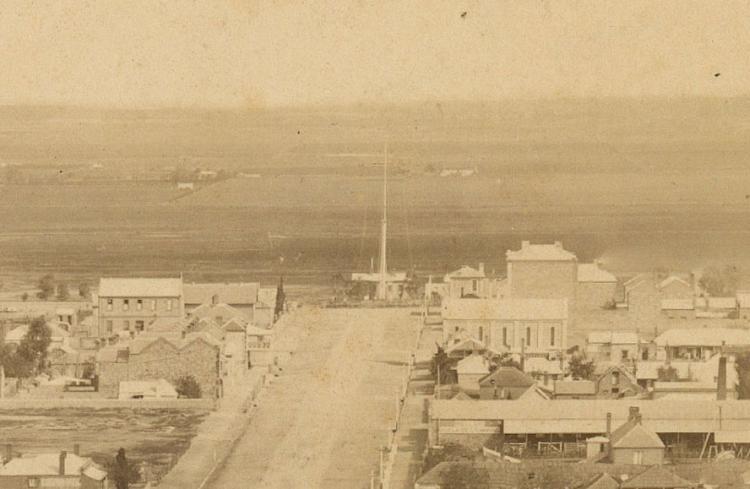
The city flagstaff can be seen in one of the images from Townsend Duryea’s famous panorama of the city in 1870. And the Port Adelaide flagstaff is known to have been in this place from multiple other images.
What is the flagstaff signallying?
But it’s not just its location that’s accurate. One of the handy features of the Garran directory is this key to the signals used at the West Terrace flagstaff.
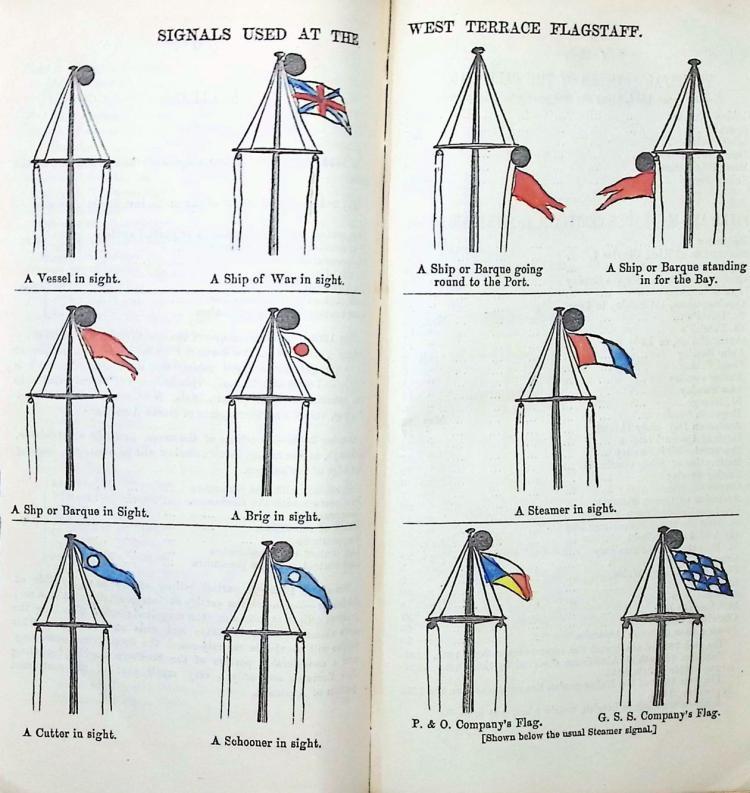
And lo and behold, the signal seen in Hankey’s painting exactly matches one of these signals - this one here, ‘A Ship or Barque going round to the Port’.
This doesn’t suggest a later embellishment from memory but would have been something that Hankey saw himself.