
Peculiar Pages and the curious case in timeline
The ultra-hidden art of double fore-edge painting
How can a book published in London in 1851 contain a remarkably accurate view of a building that had been redesigned years earlier? The answer lies in a combination of an extraordinary memory, a keen eye for detail and a great deal of patience.
Within a particular edition of The Complete Works of Thomas Campbell, held in the State Library’s Rare Book Collection, two intriguing scenes captured the attention of our researchers. What began as a simple curiosity unfolded into a fascinating investigation revealing the hidden stories held within the pages of this remarkable book.
Join us as we uncover the mystery behind these images and explore the clues that led our researchers to the answer.
The following illustration shows a small hut in the background of an image; it doesn’t stand out until you look closer at the image beyond the trees and the landscape. An even smaller gardener’s cottage can be seen in the bottom left-hand corner. The image captures a growing community, showing the relationship between urban development and the surrounding environment.
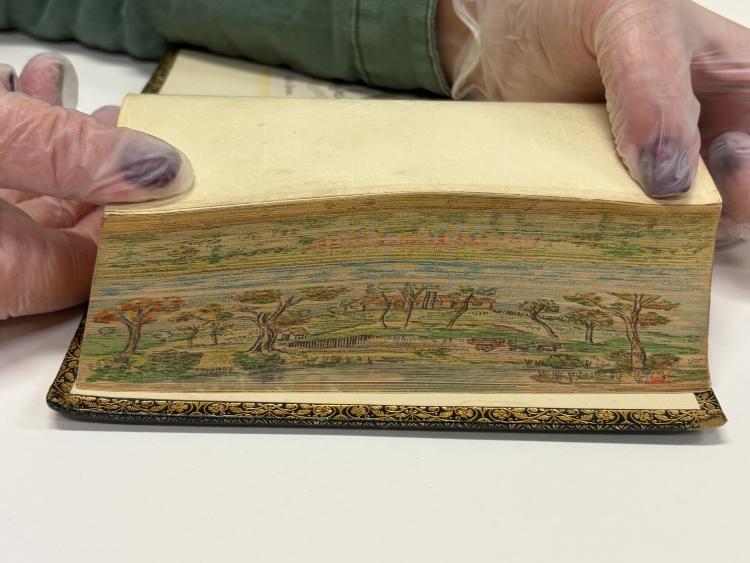
The illustration represents ‘Government Hut’ the original building before Colonel Gawler decided the building needed upgrading. Note that the hut only takes half of the fore-edge?
This is because if you flip the book and tilt the pages the other way, you will see an entirely different image. This new building closer resembles what we see of Government House today. In this image the building takes front and centre, with the removal of the big gum trees for some saplings, a grand house captures your attention.
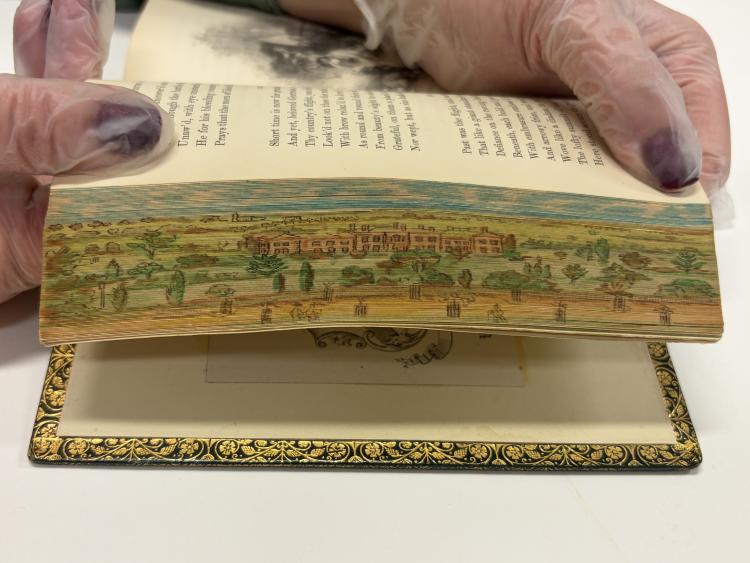
The comparison between the two images tells a story of change and is a display of wealth in the young colony. Gone is the wooden hut and here stands a grand twelve room Regency building with Italianate styling.
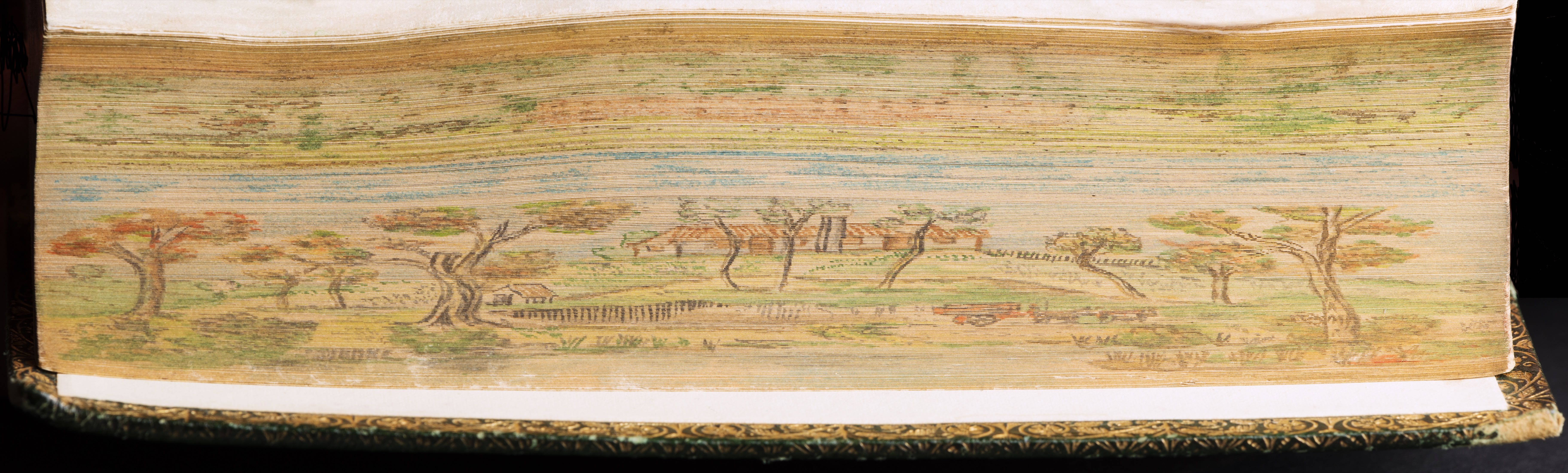
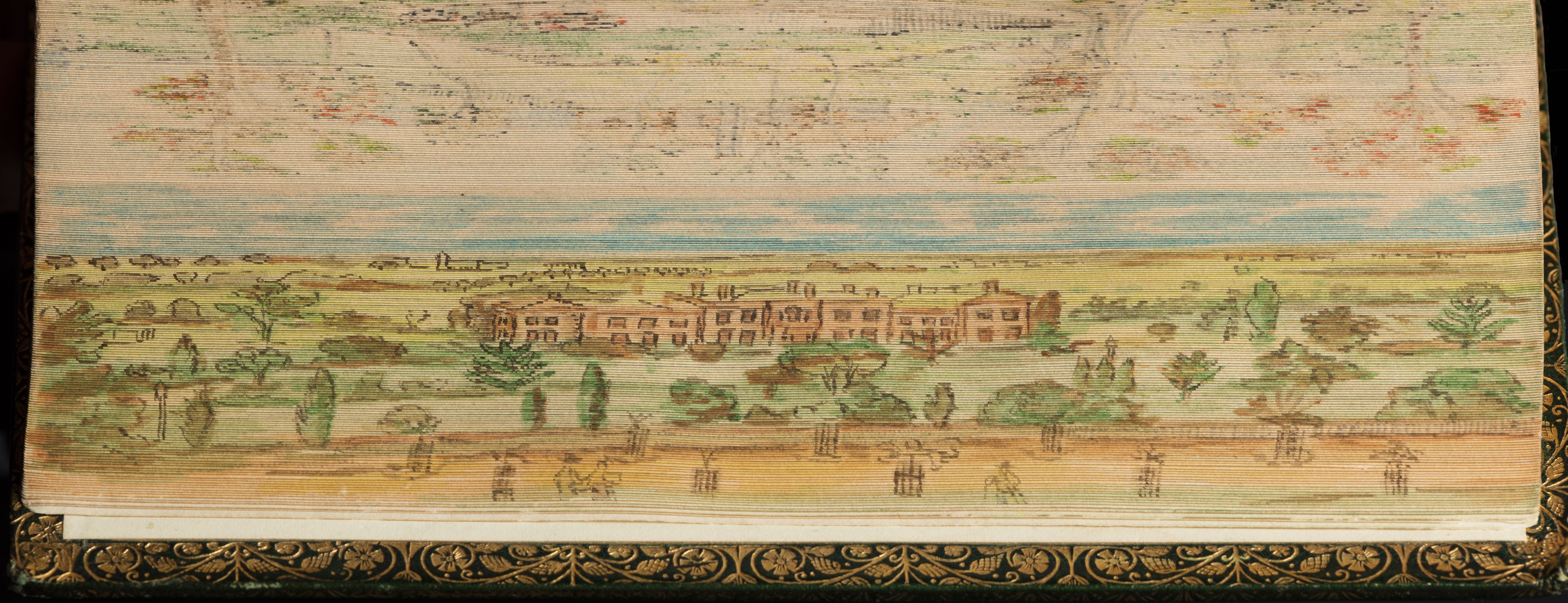
The presence of a more modern-looking Government House on the opposite side of the fore-edge illustration may help date the work. Assuming the artist was depicting what they saw at the time rather than relying on memory, the image was likely created around 1855.
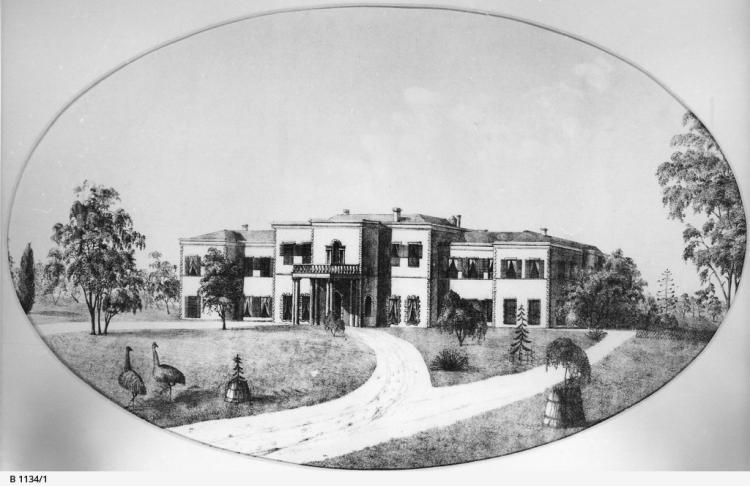
Assuming both sides were completed at the same time, to have executed these images with accuracy the artist would have likely been in Adelaide during the first years of colonisation, or had seen detailed sketches of the original.
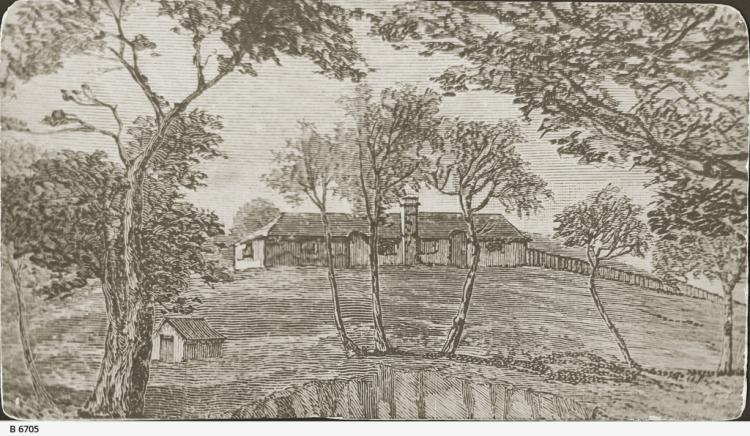
The artist may be lost to history, but the artwork offers valuable insight into in the evolution of our state.
Written by Aimee Heidrich, Engagement and Marketing Intern